Chapter 1: The Tale of Two Markets
Once upon a time in a busy town, there were two lemonade stands. One stand, Lemonade Co., was small and known by only a few close friends and family. The other, Sunny Sips, was famous in the town, with a sign saying, “Come one, come all, buy a sip of the best lemonade!” Both stands sold lemonade, but they went about it in different ways, and this is where our story of public vs. private markets begins.
The Secret Stand: Private Markets
Lemonade Co. is a bit of a secret. It’s a small business, run by a tight-knit group of friends. If you wanted to own part of this stand, you couldn’t just walk up and buy a cup. You’d need to be invited in, perhaps by knowing the owner or being part of their family. The owners and their close friends decide how much of the stand to share and who gets a chance to buy in.
In the world of finance, private markets work just like this. Companies that operate in private markets are not listed on public exchanges like the stock market. Only a select group of people, like investors or venture capitalists, are allowed to buy shares in these companies. It’s not open to just anyone. These investors often provide money to help the business grow, and in return, they might get a portion of the company.
In a private market, less transparency is involved. The company doesn’t have to publicly share all its details, like how much money it’s making or how much debt it has. The buyers and sellers are often dealing behind closed doors. Because of this, private market investments can be riskier for the investors who might not know all the details about how the business is running. But on the flip side, they could also be highly rewarding because early investors in private companies (like in tech startups) have the chance to see big returns if the business grows fast.
The Famous Stand: Public Markets
On the other side of town, Sunny Sips is not only a popular stand—it’s a well-known public business. Instead of just a few people knowing about it, the whole neighborhood (and even folks from other towns) can buy lemonade. The owner of Sunny Sips decides they want everyone to have a chance to own a part of the stand, so they open it up to the public. Now, anyone in the neighborhood can buy a cup of lemonade, and in the world of finance, this is like buying stock in a public company.
Public markets are much more open. If Sunny Sips wanted to raise money to grow, they could sell shares to the public, allowing anyone to buy a piece of the business. The shares of Sunny Sips are then traded on the stock market—an online marketplace where people buy and sell parts of companies. Because the company is publicly traded, it has to share a lot of details: its profits, how much debt it has, and what challenges it faces. This transparency helps potential buyers decide if they want to invest in the company or not.
In public markets, many people can buy and sell parts of a company. There’s a greater level of liquidity, meaning it’s easier to buy and sell shares compared to private companies. It’s more like a giant market where you can quickly find someone willing to sell and someone willing to buy. But, because there are so many people involved, public markets are usually less risky for individual investors (though no investment is ever completely risk-free).
Chapter 2: Why Private Markets Are Getting So Popular
Now, why are private markets becoming so interesting to non-finance professionals like you? Let’s take a closer look.
1. Bigger Opportunities: Many private companies are young, innovative, and ready to disrupt industries. These companies are working on cutting-edge ideas—like technology, healthcare, renewable energy or consumer goods. By investing in private markets, you have the chance to get in on the ground floor of these potentially game-changing companies.
2. The “Hidden Gem” Effect: Just like finding a small local business that later becomes a global brand, private market investments often provide the chance to own a piece of something with huge potential before it’s well-known. Think of companies like Facebook and Uber—they started in private markets, and investors who got in early saw enormous returns when the companies eventually went public.
3. Less Noise: Public companies have to deal with constant public attention. Stocks go up and down every day, and the news can be full of rumors, opinions, and hype. Private companies, on the other hand, don’t have to worry about these daily distractions. The focus is more on long-term growth.
However, remember that private markets are not without risks. Investors in private companies often have to wait a long time before they can sell their shares or see a return on their investment. It’s more of a long-term play, and it can be harder to get your money back if you need it. The companies are also less regulated, so there’s less information available about their financial health.
Chapter 3: The Choice Between Private and Public Markets
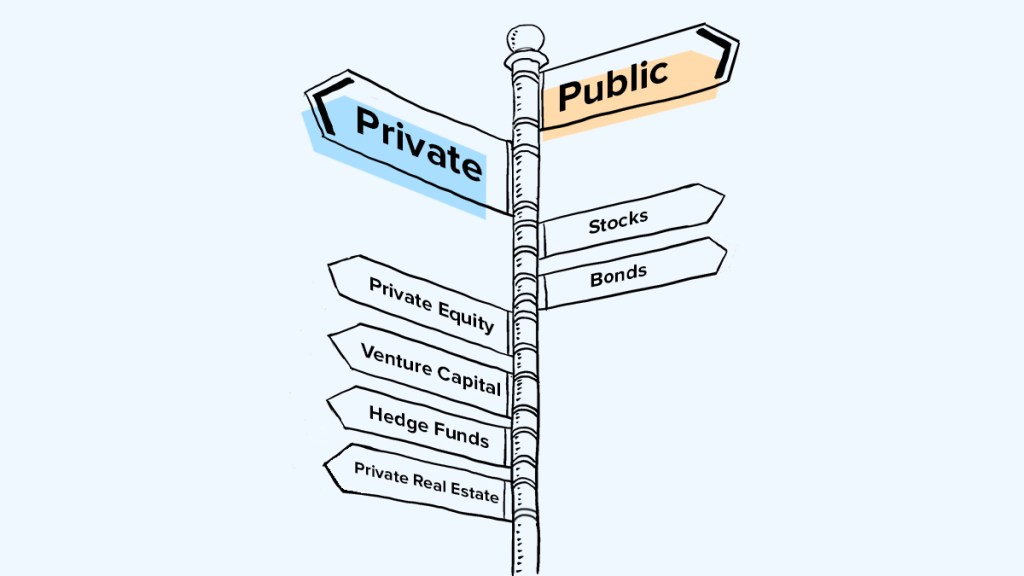
Now, imagine you’re standing at the crossroads of the two lemonade stands: the secret, private stand and the big, public stand. Both have their strengths and weaknesses.
If you want to take a risk and get in early, private markets might be your path to an exciting new adventure. But if you prefer something that’s more stable, transparent, and accessible to many people, the public market is your route.
The best advice? Know what you’re getting into. Private markets are like being part of a smaller club, while public markets are for everyone to join. Your choice will depend on your goals—whether you’re looking for exciting, high-risk opportunities or a more steady, low-risk investment.
Conclusion: The Tale Continues…
As time passed, both Lemonade Co. and Sunny Sips grew in their own ways. Private markets gave the smaller stand a chance to grow at its own pace, attracting only those who believed in its future. Public markets, on the other hand, allowed Sunny Sips to spread its lemonade to everyone, but also brought a lot more eyes, opinions, and rules into the mix.
In the end, the lesson is simple: Whether you’re interested in private or public markets, the key is to understand how they work and to make decisions based on your own goals and preferences.
So, what’s next for you? Will you join the ranks of private market investors, or will you stick to the public marketplace where everything is out in the open?
The choice, my friend, is yours
 Bitesize Capital